
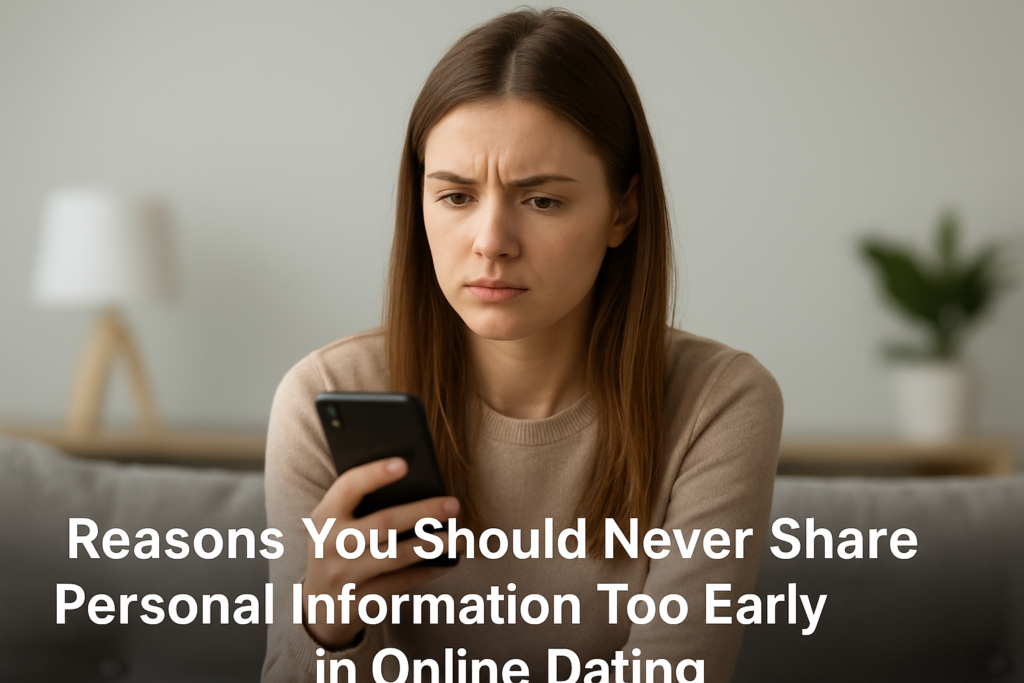
Reasons You Should Never Share Personal Information Too Early in Online Dating come down to safety, control, and protecting yourself from people who may not have good intentions.
Online dating has revolutionized how people meet and form relationships. What was once limited to chance encounters at cafes, bars, or social events can now happen with a swipe or a click.
The convenience is undeniable: you can chat, flirt, and explore potential connections from the comfort of your home. But along with the excitement comes the risk of oversharing personal information too early, which can compromise your safety, privacy, and emotional well-being.
According to the Federal Trade Commission, people lost over a billion dollars to romance scams in the last few years, proving just how risky it can be when someone shares personal information too early while dating online.
In the online dating world, patience is your best ally. Guarding your personal details ensures that you connect with the right people while minimizing the risks associated with digital dating. Here are 13 compelling Reasons You Should Never Share Personal Information Too Early in Online Dating.
Table of Contents
Toggle1. Protect Yourself from Scammers
One of the most common risks in online dating is encountering scammers. These individuals craft believable profiles to exploit unsuspecting users for financial gain, emotional manipulation, or identity theft. By oversharing personal details, you make it easier for scammers to target you.
For example, revealing your full name, hometown, or workplace can allow someone to research you online, build a backstory, and manipulate you more convincingly. Scammers often request “emergency” funds, gifts, or even personal banking information, sometimes under the guise of romance or affection.
Pro Tip: Keep your conversations within the app’s messaging system. Dating apps typically have safety measures in place, including reporting and blocking tools. Only consider moving to private communication channels, like email or WhatsApp, after you have verified the person’s authenticity over time.
2. Prevent Identity Theft
Identity theft is no longer just a plot in thrillers: it’s a real threat. Online dating profiles can reveal more than you intend. Your name, email, phone number, or photos can be used to create fake accounts, gain access to sensitive information, or commit fraud in your name.
Even small pieces of information, like your birthday or favorite restaurant, can contribute to someone building a profile that mimics your identity. Combined with other publicly available data, this can lead to significant risks.
Pro Tip: Use a separate email address for online dating accounts. Consider a unique username that doesn’t tie directly to your real name or social media handles. This reduces the likelihood of your dating activity being traced back to you.
3. Avoid Physical Safety Risks
Sharing your address, daily routines, or workplace can directly jeopardize your physical safety. While most people on dating apps are genuine, a small percentage may have harmful intentions.
For instance, if someone knows where you live or your work hours, they could plan harassment or stalking. Even seemingly harmless details about your local coffee shop habits or weekend spots can reveal your routine.
Pro Tip: Always meet new people in public, well-populated areas, and let a trusted friend or family member know your plans. Avoid sharing exact addresses or frequent hangout locations until a deep level of trust is established.
4. Guard Against Emotional Manipulation
Early oversharing can leave you vulnerable to emotional manipulation. When someone knows intimate details about your past, insecurities, or personal challenges, they can exploit that information to control or influence you.
For example, sharing your struggles with past relationships or financial stress can give a dishonest person leverage to manipulate your decisions, guilt you, or create dependency. Emotional manipulation is subtle but can be profoundly damaging.
Pro Tip: Share only light, general information initially. Focus on fun, safe topics like favorite hobbies, movies, or travel experiences. Gradually reveal personal stories as trust develops naturally.
5. Maintain Control Over Your Digital Footprint
Every detail you share online contributes to your digital footprint, and not all of it is easily erased. Messages can be screenshotted, photos can be downloaded, and profiles can be replicated on fake accounts.
Oversharing personal information may leave a permanent trail that affects your privacy long-term, impacting personal, professional, or social aspects of your life.
Pro Tip: Treat every interaction as if it could eventually be public. Avoid sending anything that could harm your reputation if shared outside the chat. Remember, the internet rarely forgets.
More Articles on This Site
Easy Ways To Spot Fake Profiles
LGBTQ+ online dating safety tips
Catfishing on dating apps – How To Protect Yourself
17 Online Dating Safety Tips for Women
Signs A dating app isn’t for you
Smart Ways to Protect Your Privacy on Online Dating Apps and Sites
6. Protect Your Financial Security
Some online predators are highly skilled at gaining access to financial information or manipulating victims into sending money. Sharing details about your financial situation early can make you a target for fraud.
Even casual mentions of your income, savings, or recent purchases can be exploited. Predators may use sympathy, urgency, or romance to extract money, often leaving victims embarrassed or financially harmed.
Pro Tip: Never discuss finances with someone you’ve just met online. Keep conversations about budgeting, careers, or lifestyle general. Avoid sending any money or revealing banking details under any circumstances.
7. Preserve Your Professional Privacy
Oversharing work details can have unintended consequences. A dating connection might reach out to your colleagues, expose your personal life, or misuse information you didn’t intend to be public.
Professionals, especially those in sensitive industries, must be cautious. Sharing company names, your role, or routine meetings can unintentionally compromise workplace security.
Pro Tip: Use broad terms when referencing your work. Instead of “I’m a marketing manager at XYZ Corp,” say “I work in marketing.” Protecting your professional boundaries ensures your dating life doesn’t spill over into your career.
8. Avoid Premature Commitments
Sharing intimate information too soon can create an illusion of intimacy, making you feel pressured to commit emotionally before you’re ready. This can affect judgment, slow down relationship-building naturally, or lead to unhealthy attachments.
For instance, discussing personal struggles or relationship expectations too early may prompt someone to manipulate you emotionally or rush the relationship.
Pro Tip: Keep initial conversations light and centered on common interests or shared humor. Gradually deepen discussions as trust and mutual respect develop.
9. Reduce the Risk of Stalking
Stalkers and obsessive individuals often use seemingly harmless details to track someone. Even revealing your weekend plans, local gyms, or favorite cafés can expose your location and patterns.
Oversharing also allows malicious individuals to monitor your movements online, potentially escalating into offline risks.
Pro Tip: Avoid posting identifiable photos with landmarks or visible street signs. Delay sharing precise schedules and locations until you’re confident in the person’s intentions.
10. Protect Your Friends and Family
Sharing personal information about loved ones can inadvertently put them at risk. Scammers or malicious individuals might exploit connections, impersonate friends or family, or use them to manipulate you.
For example, mentioning a sibling’s name or a friend’s workplace could allow someone to research them, creating an entry point for deceit or harassment.
Pro Tip: Keep friends and family off your dating profiles. Avoid referencing them in early conversations and introduce them only after trust has been established.
11. Prevent Early Misunderstandings
Oversharing can create assumptions about your lifestyle, personality, or values that may not fully reflect who you are. Early misjudgments can hinder genuine connections and create unnecessary complications.
For instance, discussing personal preferences, past relationship struggles, or lifestyle choices too soon may cause misunderstandings or biases.
Pro Tip: Stick to light topics in the early stages. Discuss hobbies, movies, or travel experiences instead of intimate personal history. This keeps initial interactions positive and curiosity-driven.
12. Maintain the Power of Mystery
Keeping personal information private naturally builds intrigue. A sense of mystery encourages meaningful conversation and allows chemistry to develop gradually. Oversharing too soon can remove this dynamic, making interactions less engaging.
Pro Tip: Share personal details incrementally, like revealing a hobby, favorite book, or a travel story one step at a time. This creates anticipation and fosters a deeper connection.
13. You Control When Trust Is Earned
Ultimately, the most important reason to avoid oversharing is control. You decide the pace at which trust is granted. Giving away information too quickly removes your ability to set boundaries and may lead to vulnerability in unsafe situations.
Pro Tip: Set personal boundaries for what you’re comfortable sharing at each stage. Communicate them confidently. Those who respect your boundaries demonstrate reliability and genuine intent.
Final Thoughts – Reasons You Should Never Share Personal Information Too Early in Online Dating
Online dating can open doors to exciting connections, but sharing personal information too early can jeopardize your safety, privacy, and peace of mind. By following these 13 reasons and implementing the Pro Tips, you protect yourself while allowing relationships to grow organically.
Remember, trust is earned, not given instantly. Protecting your personal information ensures that the people you meet online are engaging with the real you, your personality, humor, and values, not your address, financial details, or digital footprint.
The key takeaway: Take your time, be intentional, and prioritize your safety. Smart boundaries today lead to healthier, safer, and more fulfilling connections tomorrow.
FAQs – Reasons You Should Never Share Personal Information Too Early in Online Dating
1. Why is it risky to share personal information early in online dating?
It exposes you to scammers, identity theft, stalking, and emotional manipulation. Early trust is often misplaced, so keeping details private protects you.
2. What personal information should I avoid sharing at the beginning?
Avoid your home address, workplace, phone number, last name, daily routine, and financial details. Stick to hobbies and general interests instead.
3. How long should I wait before sharing personal details?
There’s no fixed timeline. Share gradually as trust builds through consistent communication, verified identity, and safe behavior over time.
4. How do I know if someone is pushing for personal information too soon?
If they pressure you, get defensive when you decline, or repeatedly ask for details you aren’t comfortable sharing, take it as a red flag.
5. What should I do if I already shared personal information too quickly?
Stop sharing more, block or report the person if needed, and tighten your online privacy settings. For sensitive details, consider changing passwords or adjusting your routine.